Parents remember great parties by the squeals and the naps afterward. Kids remember one thing: how much pure fun they had. If you want your backyard or community hall to feel like the best place on earth for a few hours, the right party inflatable rental can do the heavy lifting. I’ve coordinated events for schools, churches, and families for more than a decade, from 12-kid birthdays to 1,000-person field days. The difference between a good party and a legendary one often comes down to planning, safety, and the right mix of inflatables at the right scale.
This guide takes you through the process, end to end. You’ll find practical tips, small details that rescue a party from hiccups, and real numbers that help you budget and choose. Whether you’re eyeing a simple birthday party bounce house or a full event inflatable lineup with slides and obstacle courses, the steps here will help you design a kids fun zone that works.
Start with the shape of your party
The best inflatable plan starts with a few anchor variables. Get these details straight and everything else snaps into place. The most important is age range. Toddlers like soft spaces and gentle climbs, while preteens want speed, height, and a bit of friendly competition. Next, estimate the flow of guests. Will you have 15 kids for two hours, or 45 kids trickling in across an afternoon? That single difference changes the size and number of units you need.
Now think about the space. Measure it. Do not guess. Tape and a notepad beat optimism every time. Backyards can feel huge until you map the footprint of an inflatable bounce house with blower clearance, anchoring, and a safety perimeter. If you’re considering indoor bounce house rental, ceilings and doorways become major constraints. I’ve watched fantastic ideas get stuck in a hallway because the unit didn’t fit through the door. Clear widths and ceiling heights need to be measured, not assumed.
Finally, consider weather. Water slide rental is magic on a warm day, but the same piece becomes a headache under gray skies and 60 degrees. If spring storms loom, have a rain plan. Many local bounce house company owners can advise on backup options like swapping to a dry inflatable slide rental or moving to a gym.
Types of inflatables and where each shines
Not every party needs every category. Pick with intention. Below are the usual suspects, plus notes from the field about where they earn their keep.
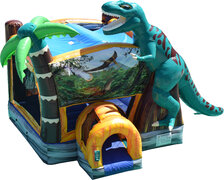
Bounce house rental: The classic inflatable bounce house. Basic 13 by 13 units fit most yards and can serve mixed ages if you create time blocks. If you want a simple, budget-friendly anchor that keeps kids moving, a bouncy castle rental is still hard to beat. For birthdays with 12 to 18 kids, one bounce house paired with a small game or slide keeps lines short and energy steady.
Jumper rental with combos: Combo units bundle a bounce area with a small slide or basketball hoop. They solve the boredom problem and give you more throughput. I lean toward combos when guest counts hit 20 to 30 and ages range from 4 to 9. They look impressive without needing the footprint of a full slide.
Inflatable slide rental and water slide rental: Slides raise the stakes. Dry slides work year round. Water slides turn a summer party into guaranteed laughter. Height matters, but angle and lane count matter more. Side-by-side lanes double throughput and create friendly races. If you have a hot day and 25-plus kids, a mid-size water slide rental can be the move, especially paired with a shade area and towels.
Inflatable obstacle course rental: Obstacle courses feel like an event inside your event. They’re ideal for schools, sports teams, and backyard party rental setups where you want active play and quick cycles. A 30 to 40 foot course handles most groups in small yards. For community events, 60-foot and longer courses can run all afternoon with teams rotating.
Inflatable game rental: Think soccer darts, basketball shoots, axe-throw inflatables, or interactive light games. These are space-efficient, quiet, and easy to supervise. They pair well with a bounce house or slide to balance lines and give kids a breather without sitting down.
Indoor bounce house rental: Indoor setups change the equation. You’ll avoid weather and have stable ground, but you trade height. Lower-profile inflatables exist specifically for gyms and halls. Plan your power and traffic flow carefully. Parents like that indoor setups feel contained, and little kids feel braver inside.
Safety first, last, and in the middle
Kids bounce. Gravity wins. Your job is to create layers of safety that work no matter how excited the guests get. Every reputable event inflatable vendor sets stakes, sandbags, and blower covers, but the real safety comes from supervision, rules, and clear capacity caps.
I typically assign one adult for every major inflatable. If you have multiple units, create a simple rotation for parent volunteers so nobody gets stuck for three hours. The supervisor’s job is not to referee play styles, it’s to enforce basic rules: age and size separation, no flips, no shoes, and capacity limits. In practice, size separation is the hardest rule to hold. Younger siblings wander in. Create dedicated blocks for the little ones and say it out loud on the party invite. If you’re running a kids party inflatable zone at a public event, use a wristband system with time slots to keep things fair and safe.
Anchoring is non-negotiable. On grass, 18-inch steel stakes or longer are standard. On concrete, sandbagging and water barrels are the norm. Ask your local bounce house company how they secure on hard surfaces and what wind speeds trigger shutdowns. Most operators pause at sustained winds around 15 to 20 miles per hour. You can’t argue with wind. If gusts push the threshold, shut it down, deflate, and pivot to indoor games or crafts. I’ve made that call, and while it’s not fun, it’s the right one.
Electrical safety gets overlooked. Each blower typically draws 7 to 12 amps. It adds up if you daisy-chain multiple blowers and a cotton candy machine onto the same circuit. Know your house circuits. If you’re unsure, run heavy-duty extension cords on separate circuits or rent a small generator. Your inflatable provider can advise on load and cord lengths. Keep cords taped or covered along walkways, not where kids run barefoot.
Matching inflatables to age groups and headcount
Ages 2 to 4: Keep it low and soft. A small inflatable bounce house with a gentle slide and plenty of parent space gives toddlers room to be brave. Cap capacity at the lower end of the stated range. If the tag says 8 kids, hold it to 5 or 6. You’ll reduce collisions and crying. Avoid steep slides and obstacle courses that require speed or upper body strength.
Ages 5 to 7: This is the sweet spot for standard jumpers and combos. Structured rules help, but kids are light and resilient. A combo unit with a small slide, plus an inflatable game rental, balances energy. If you have more than 20 kids, step up to two units so the bounce area doesn’t become a mosh pit.
Ages 8 to 12: Give them a challenge. Obstacle course rental and taller slides will carry the day. These kids love competition but also respect posted rules when they see clear races and timers. For school events, I often pair a 40-foot obstacle course with a two-lane slide, then add a skill game like soccer darts. Throughput jumps, lines move fast, and kids keep returning without crowding.
Mixed ages: Segmentation is your friend. Create designated times for little kids and older kids, or place different units in separate zones: a core bounce house rental for younger ones and a lane slide or obstacle course for older ones. Use signs and a simple announcement schedule. It keeps the peace and prevents accidental pileups.
Space and layout that actually works
Think of your yard or venue as a small park. You need clear arrivals, a safe play core, and rest spaces. Start by placing your largest inflatable first. Slides need room for the drop zone and a margin for the inevitable exuberant landing. Obstacle courses want straight runs. Bounce houses, especially with windows on three sides, work best where adults can stand and watch.
Always keep blowers and anchors outside of walking lanes and fenced away from curious fingers. Map cords along fences or walls where you can tape or cover them. Shade matters. If your yard has a sunny patch and a shady patch, put the physically intense units in shade if possible and create a rest area with water and towels in the sun. Parents gravitate to shade. If you make it easy to watch in comfort, you’ll have better supervision without nagging.
Indoors, mind ceiling fans, light fixtures, and emergency exits. Leave a clear exit path even if it means a tighter play zone. Facility managers care about codes for a reason, and you’ll appreciate the flow when the party is at full tilt. Tape edges on mats, keep shoe storage away from the main path, and set a stroller parking corner.
Power, water, and the little logistics that rescue the day
Every blower needs a dedicated outlet or a generator branch that can handle the load. If you plan for two blowers, a cotton candy machine, and a speaker, you’re probably overtaxing one patio circuit. Spread the load to the garage or kitchen circuits using heavy, outdoor-rated extension cords. I bring a 12-gauge 50-foot cord for every blower and a roll of gaffer’s tape to secure crossings.
For water slides, confirm hose length, water pressure, and drainage. A typical suburban spigot delivers 4 to 6 gallons per minute. That’s plenty for most slides. What matters more is where the water goes after it lands. A French drain can get overwhelmed, and artificial turf does not love hours of water. Put the slide where runoff can flow to lawn or garden without creating mud at the exit. Keep extra towels, a small mat at the ladder, and a defined “dry zone” for snacks.
Food and inflatables can coexist, but only with distance and rules. Keep sticky and crumbly snacks far from the entrance. A simple food tent with a hand sanitizer bottle does wonders. The fastest way to turn a bounce house into a mess is to serve frosted cupcakes three feet from the door.
Budgeting with real numbers and useful trade-offs
Prices vary by region and season, but some general ranges hold steady. A standard 13 by 13 bounce house rental often runs 120 to 200 dollars for a day in many suburban markets. Combo units sit around 180 to 300. Dry inflatable slide rental spans 250 to 450 based on height and lanes. Water slide rental tends to be 300 to 600 with delivery and setup included. Inflatable obstacle course rental can start around 300 for smaller units and stretch past 900 for long courses at large events. Indoor bounce house rental pricing mirrors outdoor options, though delivery bounce house with slide near me might be easier and sometimes cheaper for gyms with direct access.
Bundle pricing is your friend. Many local bounce house company operators will discount when you rent multiple pieces or book weekday slots. If you’re planning a school fundraiser or church picnic, ask for non-profit rates or weekday evening discounts. Delivery distance, stairs, and difficult access can add fees. Be upfront about where the unit must go. I once watched a crew haul a 350-pound roll up a narrow garden path that looked like a postcard and felt like a StairMaster. That kind of access adds time, and time adds cost.
Trade-offs to consider:
- Bigger is not always better. One right-sized combo in a modest yard creates happier play than a giant slide that dominates the space and leaves no room for spectators. Two small units often beat one big one for groups of 20 to 30. You’ll halve lines and give kids options. Extended hours rarely add much cost, but overnight rentals can. If you want to keep the fun going, ask about multi-day rates during slower seasons.
Working with a provider you can trust
A good provider does more than deliver and inflate. They help you think through wind, power, and layout. Vetting is simple and worth the time. Read recent reviews that mention punctuality, cleanliness, and responsiveness. Ask how they sanitize between rentals and how they handle rain checks. Request proof of insurance. Most reputable operators carry at least a million dollars in liability coverage. If a venue requires a certificate, give the company a few days to issue it.
I like to speak with the scheduler or owner about specifics of the site: gate width, slope, sprinkler lines, and turnaround time. If they ask smart questions back, you’ve found a pro. If they say yes to everything without clarifying, that’s a flag. A local bounce house company that knows your neighborhood tends to get traffic and access right, which makes delivery day calm instead of frantic.
Scheduling and flow so kids never stop moving
A perfect kids fun zone never feels like a queue. You can’t avoid some waiting, but you can design a rhythm. For birthdays, I break the party into loose beats: warm-up bounce time, snacks and drinks in the shade, a second play block with the big features, cake and photos, and a final burst of play. If you quietly shorten cake time, kids won’t mind. They want to move.
For school and community events, throughput rules. Two-lane slides, timed obstacle runs, and quick-reset games like basketball shoots keep momentum. Place a volunteer at the start and the finish. The start volunteer groups kids, the finish volunteer clears the landing and celebrates with high fives. It sounds small, but it keeps things flowing and removes the awkward scramble at the bottom of slides.
Weather calls and backup plans
Sunny days make heroes of us all. Planning for wind and rain separates the smooth operators from the stressed. Watch the forecast two days out and again the morning of. Communicate with your provider. Most have clear policies: light rain is often fine, but wind thresholds are strict. If a front is within an hour, consider starting 30 minutes early. I’ve moved start times many times to catch a weather window. It saved the day more than once.
Have a contingency that isn’t a letdown. Indoors, swap to an indoor bounce house rental and a couple of inflatable game rental options like soccer darts or a light-reactive game. Outdoors, you can pivot to relay races, tug of war, and a craft table under a canopy. The key is to act decisively. Kids adapt quickly if adults project confidence.
Cleanliness and hygiene without killing the mood
Parents notice the smell and look of inflatables. Clean vinyl, fresh air, and visible sanitizing go a long way. Good companies clean after every rental and often again on-site if dust or grass sticks during setup. When the crew starts inflating, I look for clean surfaces and intact mesh. If something looks off, speak up politely right away. Most crews are proud of their gear and will fix it on the spot.
During the party, keep a small kit: baby wipes, hand sanitizer, a couple of extra socks, and trash bags. Announce the socks rule if needed. Barefoot is fine for many units, but socks cut down on sticky feet and tiny cuts. If you’re running water features, set a towel station and a small bin for dripping suits.
Common mistakes and easy wins
I’ve seen dozens of parties avoid the same trap only after doing it the wrong way once. The most common misstep is underestimating load time. Delivery windows are real. Ask your provider to arrive 60 to 90 minutes before guests do, especially for complex setups. A second mistake is crowding exit zones. Kids land, stumble, and need a few steps to clear. Think of exits like slide runouts at a playground. Give them space.
An easy win: music at a conversational volume and a simple emcee voice every 15 minutes. You don’t need a DJ. A playlist and a friendly adult calling time for the younger group, then the older group, keeps everyone in the loop, especially at mixed-age parties.
Another win: a shoe corral. A shallow bin or low rack prevents the dreaded shoe pile. Label a sign so kids remember where to look. You will save ten minutes at pickup time, and parents will silently thank you.
A simple planning checklist you can trust
- Measure the space, including gates and ceilings, and take photos to share with your provider. Match inflatables to ages and headcount, favoring two smaller units over one oversized piece when in doubt. Confirm power, circuits, and cord runs, and plan drainage for water slides. Assign adult supervisors per inflatable and set clear time blocks for different age groups. Set a weather backup with your provider, and communicate changes early if the forecast shifts.
Real-world sample setups
Small backyard birthday, ages 4 to 7, 12 to 16 kids: One combo jumper rental with a small slide, plus a compact inflatable game like a basketball shoot. Layout the combo in shade if possible, with a water cooler and snack table opposite the entrance. Budget roughly 220 to 320 dollars.
Neighborhood block party, mixed ages, 30 to 45 kids throughout the afternoon: One two-lane dry slide and one 13 by 13 bounce house rental. The slide handles the older kids, the bounce house gives younger ones a home base. Add cones to mark queue lines. Budget around 500 to 700 dollars.
Summer birthday, ages 6 to 10, 20 to 25 kids: Mid-size water slide rental with a side hose for re-wetting, plus a small inflatable bounce house or game. Towels and a sunscreen station near the adults. Budget 400 to 650 dollars.
School field day, ages 8 to 12, rotating classes: Inflatable obstacle course rental, at least 40 feet, paired with a two-lane slide and two small skill games. Time each class for 20-minute rotations. Budget 900 to 1,600 dollars depending on size and hours.
Indoor winter party, ages 3 to 6, church hall: Low-profile indoor bounce house rental plus a toddler-friendly soft play corner. Keep snacks clear of the entrance. Budget 180 to 300 dollars.
Booking timeline and how to hold your spot
Spring and early summer book fast. For peak Saturdays, reserve four to six weeks out. Shoulder seasons and weekdays are easier. If your date is firm, put down a deposit and confirm delivery windows in writing. Ask what happens if rain forces a move to Sunday. Many companies offer flex rescheduling if you decide 24 hours in advance. Keep your provider in the loop about street parking, gated communities, or HOA rules that might slow delivery trucks.
The final polish: details kids notice, and parents appreciate
Themes help, but you don’t need custom wraps to make a party feel cohesive. Color counts. If you choose a tropical water slide, pick bright tablecloths and fruit-infused water. If you go with a castle-style inflatable bounce house, simple pennant flags and a bubble machine make the entrance feel like an occasion. Bubbles cost little and photograph beautifully. Speaking of photos, put one chair in the shade where kids can catch their breath and take a picture with the birthday child. You’ll capture grins in good light without staging a formal shoot.
Offer a quick safety demo before the first rush. Thirty seconds is enough: socks on, no flips, wait for the landing area to clear, and older kids give younger kids space. Kids listen when it’s part of the kickoff, not an interruption later.
When to go big, and when to keep it simple
If you have a milestone birthday with a larger guest list, an event inflatable lineup with a slide, a bounce zone, and a game station feels like a festival. There’s a reason schools lean on multi-unit setups: choice prevents crowding and gives every personality a place to shine. On the other hand, a backyard party rental for a tight group thrives with a single well-chosen piece. I’ve seen six kids rotate happily for two hours on a single combo because they had space to play and no pressure to rush.
The goal is not to fill every square foot. It’s to create a safe, joyful rhythm where kids can bounce, slide, race, and laugh without friction. That happens when the equipment fits the space, the rules fit the ages, and the flow fits the day.
Parting wisdom from many happy naps
The best compliment after any party inflatable rental isn’t a five-star review. It’s the quiet car ride home, the grass in damp hair, the cupcake smeared in a heroic stripe, and the sudden silence as a kid falls asleep with a half-formed smile. Get the fundamentals right: choose the right pieces for your space and ages, partner with a reliable local bounce house company, and run a simple plan that keeps kids moving. The rest takes care of itself with the thump of vinyl, the whoosh of blowers, and a backyard that feels, for a few hours, like a private amusement park.